
Diabetic foot ulcers (DFUs) are chronic, difficult to heal, and potentially life-threatening.
For patients with severe DFUs with exposed bone or tendon – known as University of Texas (UT) grade 2 and 3 ulcers – the stakes are even higher, with increased risk of infection,[1] amputation, [2] and five-year mortality rates of up to 45%.[3]
To manage these high-stakes DFUs, podiatrists often need to fill deep soft-tissue deficits and rapidly support granulation tissue over exposed muscle, bone, and tendon.
Many skin substitutes are designed for single-layer wound contact and may not be specifically indicated for deep wounds involving exposed structures.
Healing Benefits
of Fish Skin
Deep Sea, Cold-Water Cod
Minimally Processed
Homologous to Human Skin
Kerecis fish skin fills a critical gap in treating severe DFUs with exposed bone & tendon
- We are the only tissue-repair product that is FDA cleared and has a labeled intended use for treating full-thickness wounds with exposed bone and tendon. [4]
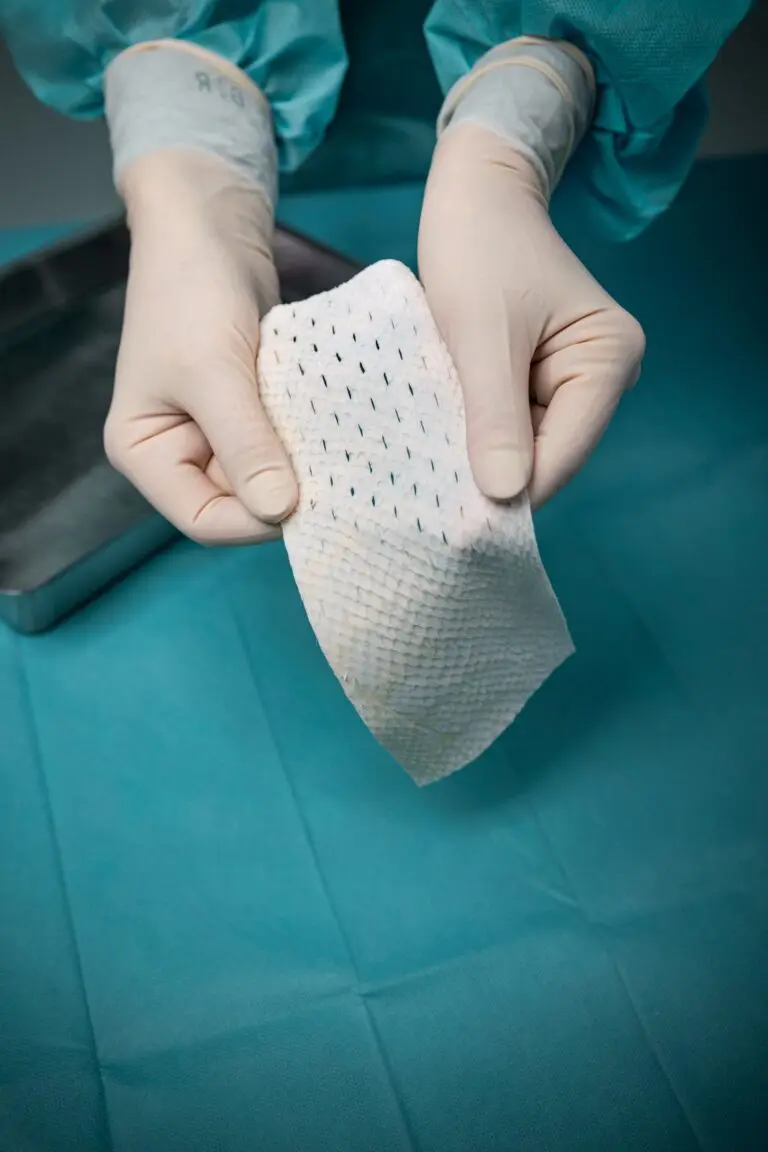
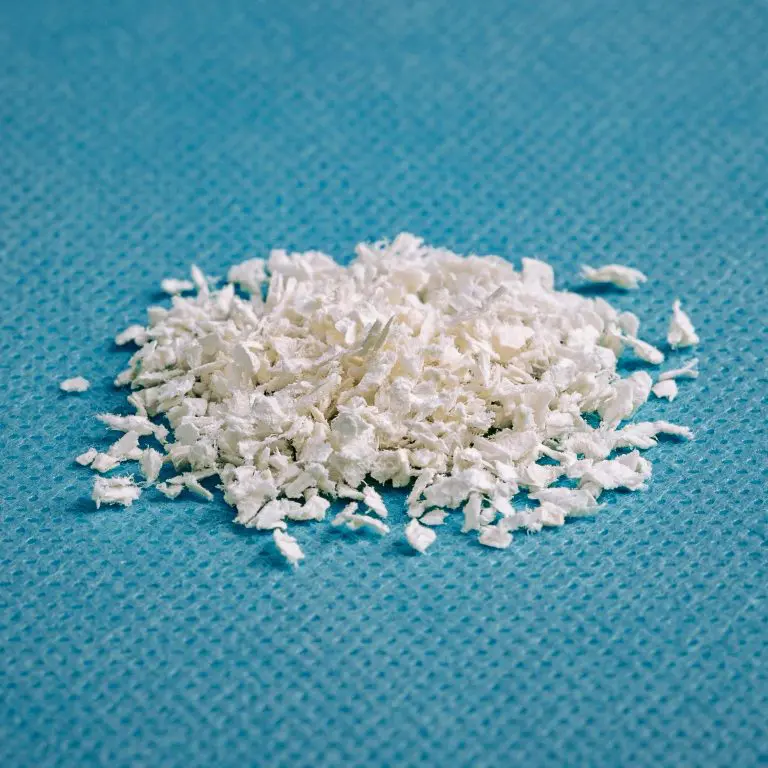
- Unlike other products that only have single-layer contact with the wound bed, Kerecis fish-skin grafts can be stacked or interspersed in deeper wounds,[5] filling deficits and making the newly formed granulation tissue flush with the skin surface. [6]
- Our fish skin’s molecular content, including rich glycosaminoglycans, elastin, and fatty acids, plays a key role in facilitating cell migration and maintaining a mechanical bacterial barrier, [7,8]helping to fast-track healing and protect against environmental threats.
Together, these key features empower podiatrists to close their hard-to-heal DFUs.
Industry-Leading Clinical Evidence for Deep DFUs
In a breakthrough multi-center RCT evaluating deep UT grade 2 and 3 DFUs, Kerecis fish-skin grafts healed 66% more relative DFUs at week 16 compared to standard of care.[9]This is the world’s largest RCT focused exclusively on complex DFUs with exposed bone and tendon, offering a new level of evidence for clinicians managing these hard-to-heal wounds.
Patients treated with Kerecis fish-skin grafts had a 1.6 times greater chance of healing and healed close to two weeks earlier than those treated with standard of care [9]– potentially reducing the risk of severe complications associated with prolonged ulceration.
Kerecis Demonstrates Faster Wound Closure than Standard of Care for Deep DFUs[9]
Specifically, Kerecis was 104% more likely to heal UT Grade 2 ulcers and 70% more like to heal UT Grade 3 ulcers than standard of care
DFU Case Study
Thousands of podiatrists already trust Kerecis fish-skin grafts to manage their complex wounds, including hard-to-heal DFUs.
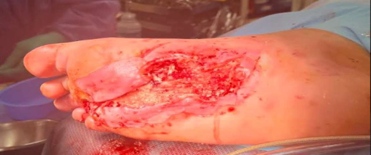
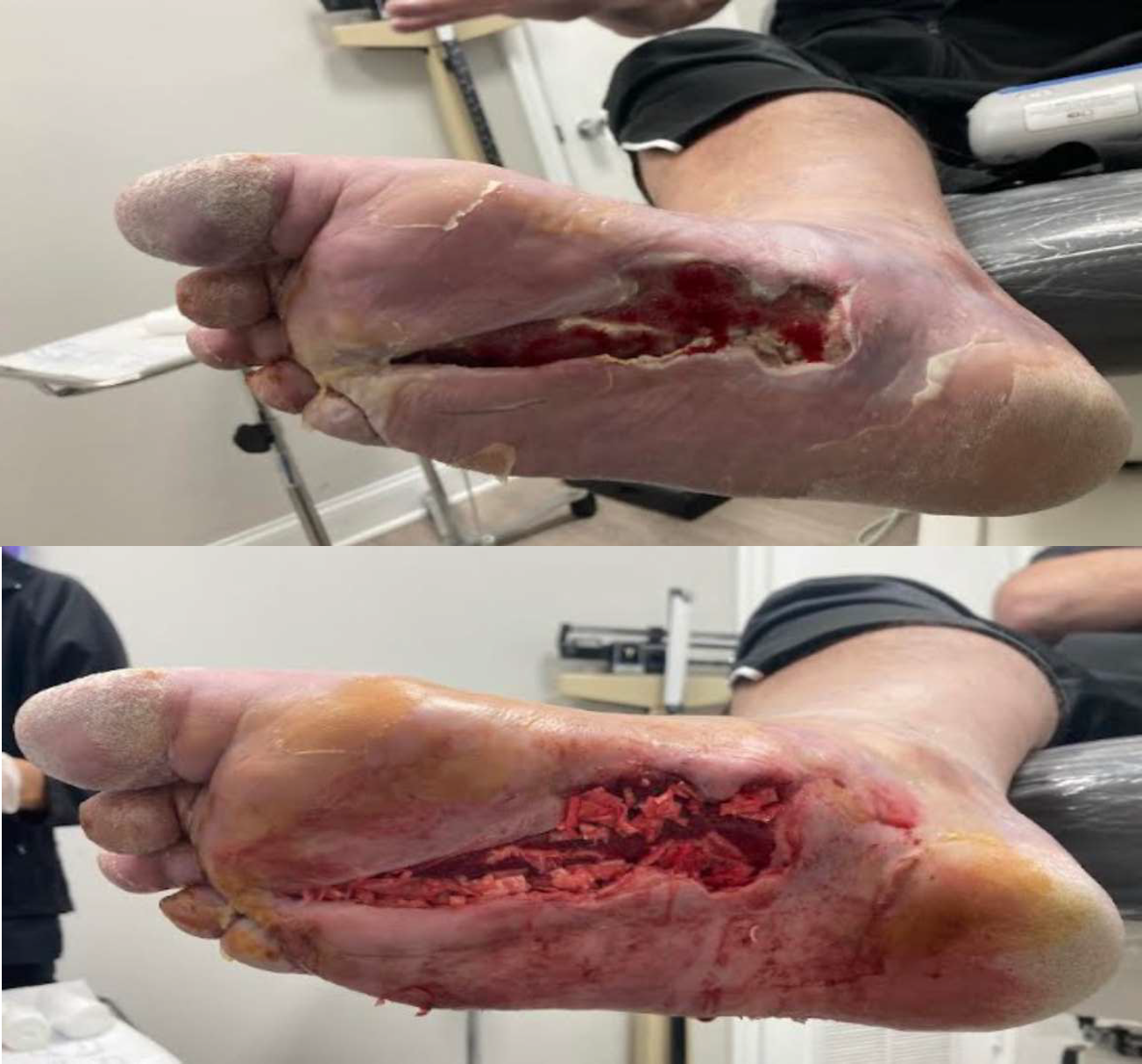
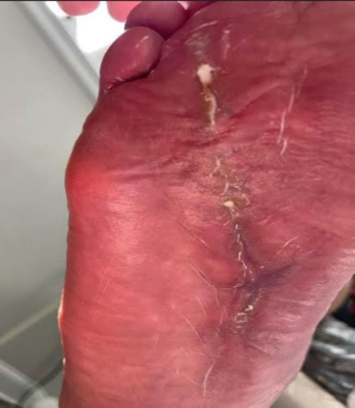
One powerful example: this DFU with exposed tendon and muscle completely healed after three applications of Kerecis MariGen products, followed by an advanced skin flap. The patient was then able to return to their normal activities.
Diabetic Foot Wound
Patient History, Initial Treatment
- 58-year-old male
- Past medical history of type II diabetes, previously treated for two months for right foot sub 4th metatarsal head ulcer
- The patient presented to the emergency room febrile and septic, the wound was draining and positive for ecchymosis, edema, and erythema
- Patient was treated with repeat surgical incisional and drainage, 4th metatarsal head resection, and application of antibiotic beads
Kerecis Application
Antibiotic beads were removed and excisional debridement was performed to deep, healthy granulation tissue and tendon/muscle up to the flexor tendon sheath proximally. MariGen Micro and MariGen fenestrated were applied with negative pressure wound therapy (NPWT). A significant improvement in wound depth was noted 21 days after the first application with no sign of local infection. Continued with weekly NPWT, debridement and 2 additional MariGen applications. At 5 months an advanced skin flap was performed.
Final Outcome
3 weeks after skin flap and 3 MariGen applications, the surgical incision was completely healed and the patient returned to normal activities.

Try MariGen for Your Next DFU
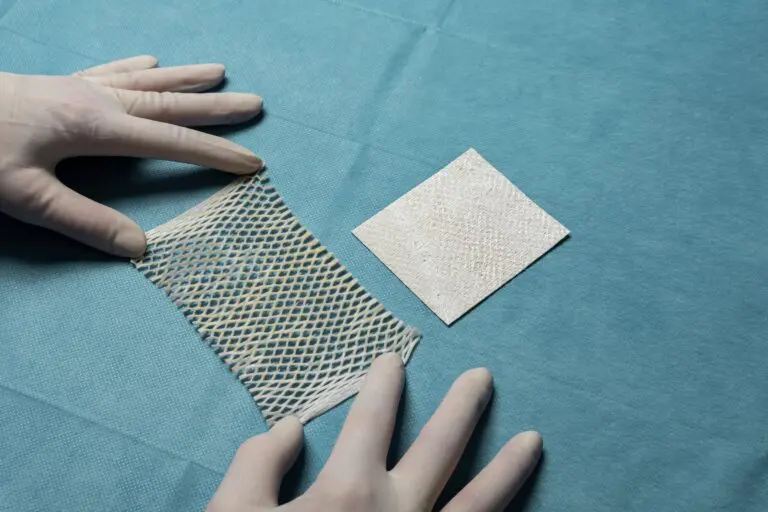
Kerecis’ MariGen product line pioneers the use of fish skin to manage chronic wounds like hard-to-heal DFUs. Our diverse variations are designed to meet your wound-care needs.
Complementing our strong clinical evidence to support documentation, MariGen’s product prices remain favorable compared to current CMS reimbursement levels. The average cost of our MariGen products fall well below the flat rate of $127.14 per cm² for hospital outpatient departments, ambulatory surgical centers, physician offices, and home health providers.

Need more information?
Important Information
Armstrong, D. G., Boulton, A. J., & Bus, S. A. (2017). Diabetic foot ulcers and their recurrence. New England Journal of Medicine, 376(24), 2367-2375.
Lavery, L. A., Armstrong, D. G., & Harkless, L. B. (1996). Classification of diabetic foot wounds. The Journal of Foot and Ankle Surgery, 35(6), 528-531.
Moulik, P. K., Mtonga, R., & Gill, G. V. (2003). Amputation and mortality in new-onset diabetic foot ulcers stratified by etiology. Diabetes Care, 26(2), 491-494.
MariGen Instructions for Use. Indicated for full-thickness wounds extending through the dermis to deeper tissues such as subcutaneous fat, muscle, tendon, or bone.
MariGen Instructions for Use. Standard and meshed variations may be stacked to complete coverage. Micro variation is fragmented and may be interspersed in the wound to adhere to and fill deep wound spaces and irregular geometries.
Shahriari S, et al. Piscine-Derived Acellular Dermal Matrix in Upper Extremity Reconstruction. Index ePlasty, 2025: e10. PMID: 40661094; PMCID: PMC12257959.
Yoon J, Dogeon Yoon, Lee H, et al. Wound healing ability of acellular fish skin and bovine collagen grafts for split-thickness donor sites in burn patients: Characterization of acellular grafts and clinical application. Int J Biol Macromol. 2022;205:452-461. doi:10.1016/j.ijbiomac.2022.02.055
Jiménez-Gastélum GR, Aguilar-Medina EM, Soto-Sainz E, Ramos-Payán R, Silva-Benítez EL. Antimicrobial Properties of Extracellular Matrix Scaffolds for Tissue Engineering. BioMed Res Int. 2019;2019:1-7. doi:10.1155/2019/9641456
Dardari, et.al. Intact Fish Skin Graft to Treat Deep Diabetic Foot Ulcers. The Odinn Trial. NEJM Evidence, 2024: 5. DOI: 10.1056/EVIDoa2400171.