
MariGraft is intact fish skin used to support tissue regeneration in burns.[1] Because there is no known risk of viral disease transfer from North Atlantic cod to humans, the fish skin only needs mild processing with our proprietary method.[2,3]
This mild processing preserves the skin’s natural qualities[1], including its three-dimensional structure, mechanical properties, molecular organization, and composition.[1,2,3,5]
MariGraft promotes healing with minimal impairment of functionality and positive cosmetic outcomes.[2,4,9] The product is homologous to human skin[5] and when applied to damaged tissue, such as a burns or wounds, helps to support the body’s own cells to regenerate tissue.[1,2,5]
MariGraft Benefits
Easy to Apply [6]
Homologous to Human Skin[5]
Improved Wound Closure Rates[2,7,8]
Better Functional Outcome[9]
No Chemical Cross-linking[5]
Dermal and Epidermal Layers Intact[5]
Natural Microbial Barrier and Wound Cover[1,3,5]
Strong, Robust and Conforms to the Wound Bed[5]
Three-dimensional Structure and Natural Porosity Preserved[5]
3-year shelf life with easy storage at or below room temperature
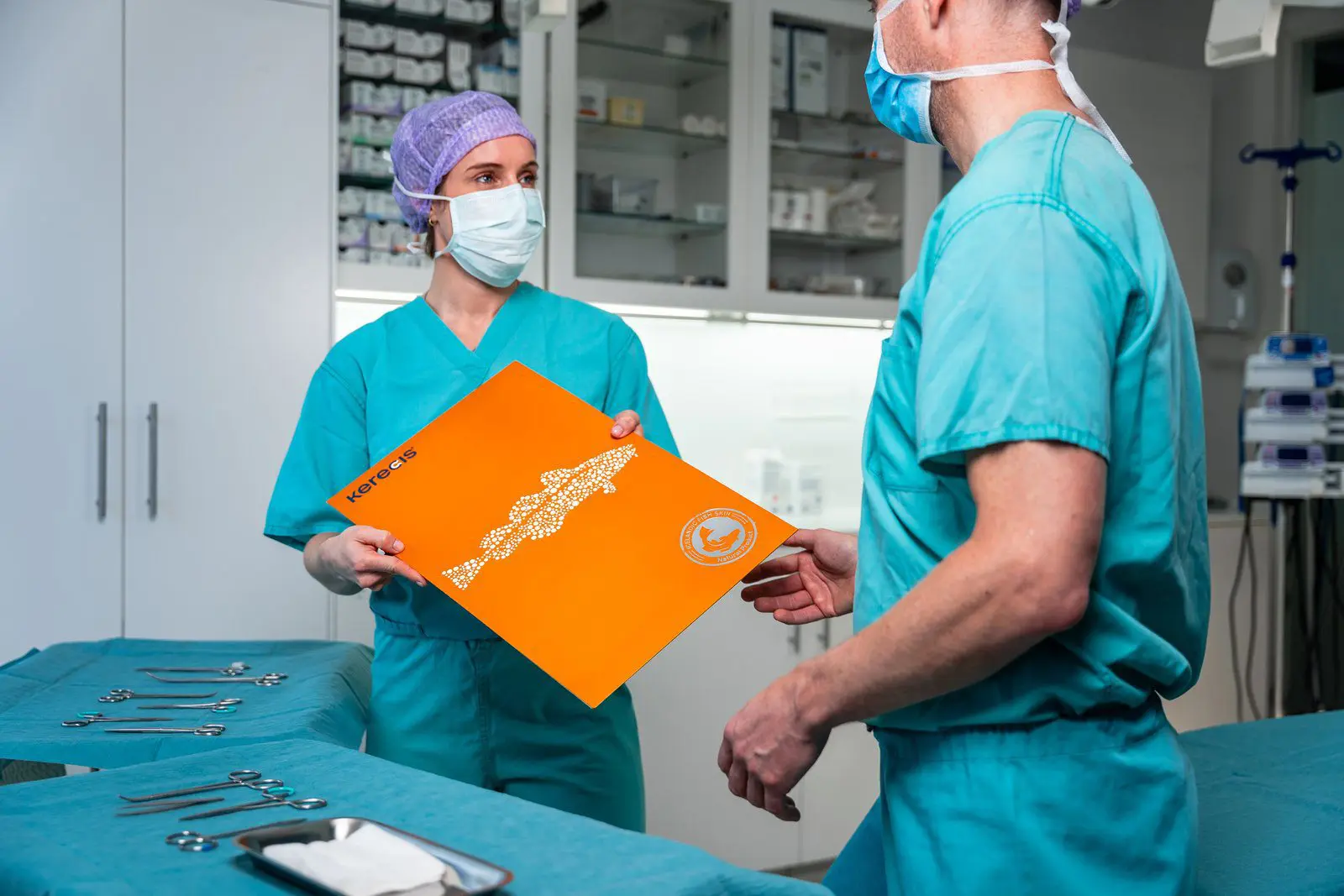
MariGraft Product Variations
Expanse
MariGraft Expanse is a 2:1 pre-meshed intact fish-skin graft designed to expand and cover larger wounds. Provides a viable clinical and economic solution for large wounds.
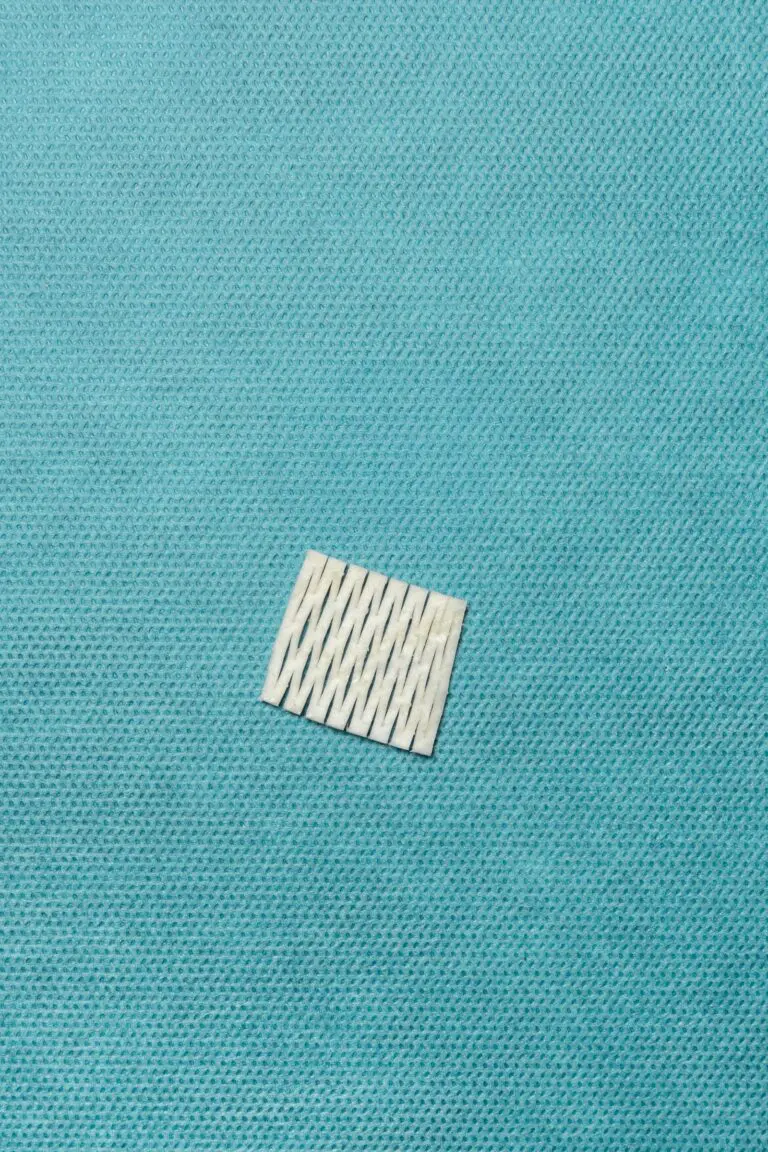
Developed for burns
The product is developed especially for treatment of burns.
Can be used on patients, 18 years or older for a variety of wounds. For full list of intended use, please see the product IFU.

Need more information?
From the town of Ísafjörður in northwest Iceland, Kerecis develops, manufactures, and distributes patented fish-skin medical devices that support soft tissue regeneration in the body, with regulatory clearance in the United States, Canada, Europe, and beyond.
Important Information
Magnusson, S. et al. Decellularized f ish skin: characteristics that support tissue repair. Laeknabladid 101, 567–573 (2015).
Baldursson, B. T. et al. Healing rate and autoimmune safety of fullthickness wounds treated with fish skin acellular dermal matrix versus porcine smallintestine submucosa: a non-inferiority study. Int. J. Low. Extrem. Wounds 14, (2015).
Rakers, S. et al. ‘Fish matters’: the relevance of fish skin biology to investigative dermatology. Exp. Dermatol. 19, 313–324 (2010).
Wang, Y., et al. Burn injury: challenges and advances in burn wound healing, infection, pain and scarring. Adv Drug Deliv Rev. 123, 3-17 (2018).
Magnusson, S., Baldursson, B. T., Kjartansson, H., Rolfsson, O. & Sigurjonsson, G. F. Regenerative and Antibacterial Properties of Acellular Fish Skin Grafts and Human Amnion/ Chorion Membrane: Implications for Tissue Preservation in Combat Casualty Care. Mil. Med. 182, 383–388 (2017).
Pujji O, Jeffery SLA, Safe burn excision prior to military repatriation: an achievable goal? BMJ Military Health 2018;164:358-359.
Kirsner, R. S. et al. Double-Blind, Prospective, Randomized Clinical Trial on 170 Acute Wounds Shows Significantly Faster Healing Rate with Intact Fish Skin Compared to Human Amniotic Membrane. Natl. Am. Podiatr. Med. Assoc. Annu. Sci. Meet. (2018).
Lullove E. J. et al. A multicenter, blinded, randomized controlled clinical trial evaluating the effect of Omega-3– rich fish skin in the treatment of chronic, nonresponsive diabetic foot ulcers. Wounds. Published online April 15, 2021.
Wallner C. et al. A Comparison of Intact Piscine Skin, Split-thickness Skin Graft, and Lactic Acid Membrane in Treating Superficial and Deep Burn Wounds Following Enzymatic Debridement. J Burn Care Res. 2021; 42 (Suppl 1): 125-126.
Patel, M. & Lantis II, J. C. Fish skin acellular dermal matrix: potential in the treatment of chronic wounds. Chronic Wound Care Manag. Res. 6, 59–70 (2019).
Stone R 2nd, Saathoff EC, Larson DA, et al. Accelerated Wound Closure of Deep Partial Thickness Burns with Acellular Fish Skin Graft. Int J Mol Sci. 2021;22(4):1590